Living with constant knee pain can make even the simplest daily activities feel difficult. Climbing stairs, getting out of a chair, or taking a short walk may become painful over time. When medications, exercises, and other treatments stop providing relief, many people begin exploring knee replacement surgery. At this stage, one common question comes to mind. Should you choose a total knee replacement or a partial one? The answer depends on the condition of your knee, the extent of damage, and your overall health. Understanding the difference between these procedures can help you have a more meaningful discussion with your orthopaedic surgeon.
Understanding Total Knee Replacement
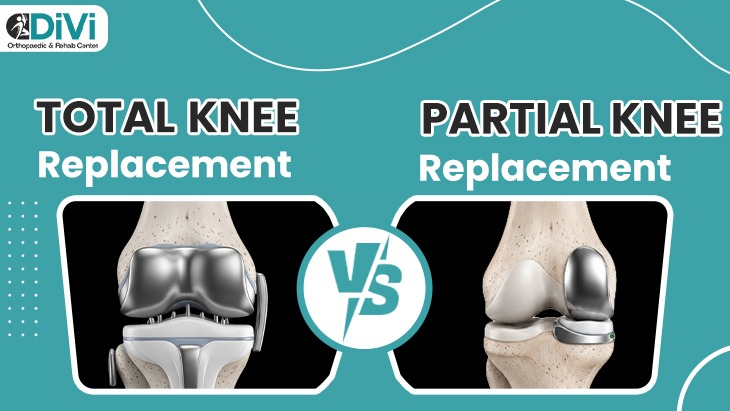
A total knee replacement is recommended when arthritis or joint damage affects all three compartments of the knee. During the procedure, the damaged cartilage and bone are removed and replaced with artificial components designed to restore movement and reduce pain.
People with severe osteoarthritis, rheumatoid arthritis, or advanced joint degeneration often benefit from this procedure. Since the entire knee joint is treated, patients usually experience significant pain relief and improved mobility after recovery.
What Is Partial Knee Replacement Surgery?
Many patients ask, what is partial knee replacement surgery, especially after hearing that not every damaged knee requires a complete replacement.
A partial knee replacement treats only the damaged section of the knee while preserving the healthy cartilage, ligaments, and bone. This procedure is also known as unicompartmental knee replacement because only one compartment of the knee is replaced instead of the whole joint.
Since less bone and tissue are affected, many patients recover faster and retain a more natural feeling in the knee after surgery.
Who Is a Candidate for Partial Knee Replacement?
Not every patient qualifies for this procedure. Doctors carefully examine scans, physical movement, and the extent of arthritis before making a recommendation.
If you are wondering who is a candidate for partial knee replacement, these are some common factors doctors consider:
- Damage is limited to one compartment of the knee.
- Knee ligaments remain healthy and stable.
- Knee movement is still reasonably good.
- The deformity of the knee is minimal.
- Pain is concentrated in one specific area.
If arthritis has spread throughout the entire joint, a total knee replacement may provide better long-term relief.
Partial Vs Total Knee Replacement
When comparing partial vs total knee replacement, neither option is universally better. The right choice depends on the patient’s condition.
A partial replacement usually involves a smaller incision, reduced blood loss, and a shorter hospital stay. Many patients also return to normal activities sooner because healthy parts of the knee remain untouched.
A total replacement addresses widespread joint damage and may offer better long-term results for patients with severe arthritis affecting the entire knee.
This naturally leads many people to ask, which is better partial knee replacement or total knee replacement. The truth is that there is no single answer. The better procedure is the one that matches your knee condition and lifestyle after a detailed medical evaluation.
Making the Right Decision
Choosing between a total and partial knee replacement should never be based only on internet research or personal opinions. Every knee is different, and treatment should always be personalised after a proper clinical assessment, imaging studies, and discussion with an experienced orthopaedic specialist.
If you are considering total knee replacement surgery in Mumbai, consulting the Dr .Divyesh Bukalsaria, Knee replacement surgeon at Divi Orthopaedic & Rehab Center can help you understand whether a partial or complete knee replacement is the most suitable option for your condition and long-term mobility goals.