What Is Osteoporosis?
Osteoporosis is a condition that weakens the bones to the point where even a mild bump or fall could result in a fracture. Most people do not realise they have it until after a bone breaks. It progresses quietly inside the body and makes the bone structure brittle and porous over time. The loss of bone mass becomes more pronounced as people grow older, especially after the age of fifty.
Women are at higher risk after menopause. Genetics and lifestyle also play a major role. This condition does not cause pain until a fracture occurs. That is why it is often described as a silent disease. People with osteoporosis may lose height, develop a hunched posture or feel sudden back pain due to spine fractures. Early detection plays a major role in reducing the risk of serious injury.
What Are The Early Warning Signs Or Symptoms Of Osteoporosis?
There are no dramatic symptoms in the early stages. That makes regular screening important, especially if there is a family history of bone related conditions. The most common symptoms of osteoporosis appear only after a bone has already weakened. These may include:
- Back pain,
- Frequent fractures,
- A gradual reduction in height, and
- A stooped or hunched upper back.
Sometimes a person may experience pain in the spine or notice they are unable to stand as straight as before. These signs can also indicate spinal compression fractures. In most cases people overlook these symptoms until the situation becomes serious. Bone density testing is the only reliable method to detect the condition early.
Why Diet Matters in Osteoporosis
Osteoporosis is a disease that weakens the bones and makes them lighter and more susceptible to breaking easily. If not accompanied by the right diet, it can easily aggravate the condition and bring a lot of discomfort and pain. Most individuals pay attention to supplements or drugs, but nutrition is a key component of any osteoporosis treatment . It is important to know which foods to avoid in order to improve the quality of life.
1. High-Sodium Foods are a Silent Threat
Many people consider salt harmless, but it has been found that excessive intake of sodium causes calcium to be expelled from the body through urine. This means that your body takes calcium from your bones to equalise the situation. In the long run, this process contributes to the development of weak bones. Some of the foods that are rich in sodium include packaged soups, canned vegetables, processed snacks, and fast foods. If you are serious about following the best food for strong bones and joints, then cutting down on salt should be a consideration.
2. Caffeine Can Be a Bone Saboteur
Caffeine lovers, take note. Moderate consumption of coffee is not dangerous, but too much may hinder calcium absorption into the body. Caffeinated beverages such as coffee, some teas, and energy drinks leach out the bone-essential nutrients from the body.
3. Soft Drinks and Phosphates – A Harmful Combo
Sodas contain a lot of phosphoric acid, especially the ones that are based on cola. Although the body requires phosphate in small quantities, excessive amounts of it can disrupt the body’s calcium levels.
4. Alcohol in Excess Can Damage Bone Structure
While moderate alcohol consumption is not considered to be hazardous, excessive drinking interferes with the process of bone remodelling and hormonal balance. It also leads to the likelihood of falling and fracturing bones, particularly among the elderly population. For those who want to have stronger bones, alcohol consumption should be avoided, especially if one is on any osteoporosis treatment or after a fracture.
5. Beware of Oxalate-Rich Foods
Spinach, rhubarb, and beet greens are all healthy foods, but they contain high levels of oxalates that hinder calcium absorption. This does not mean that you should avoid them altogether, but it is advisable to moderate their intake while increasing the intake of other foods that are rich in calcium.
6. Refined Sugar and Sweets
Consuming too much sugar leads to inflammation and poor calcium absorption in the body. It also causes obesity, which in turn puts additional pressure on bones.
7. Red Meat
Protein is important, but high intake of red meat, which is rich in sulphur containing amino acids, leads to calcium loss through urine. Replace red meat with lean poultry, plant based protein sources, or fish to help improve overall bone health.
What Not To Eat If You Have Osteoporosis?
Food has a direct effect on bone health. While the focus is often on what to eat, it is equally important to know what to avoid. Excess salt can lead to calcium loss through urine. Sugary snacks and soft drinks should be limited. Carbonated drinks often contain phosphoric acid which affects calcium absorption. People must also avoid caffeine heavy beverages and alcohol.
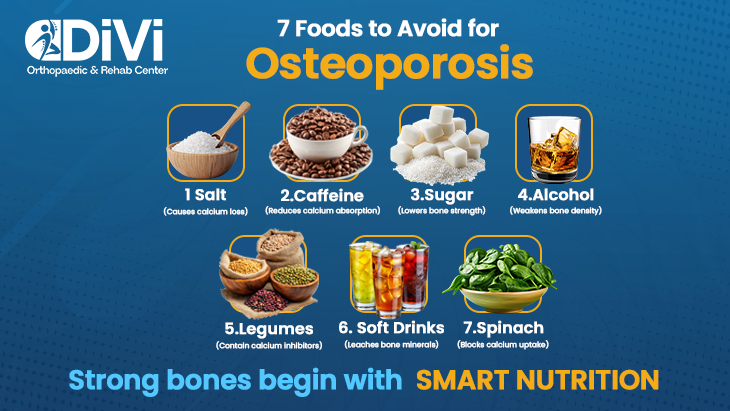
7 common foods that may worsen osteoporosis by affecting calcium absorption & bone strength.
These reduce the body’s ability to absorb vital minerals. Foods that contain excessive vitamin A can also weaken bones over time. People must always speak to a dietitian when planning an osteoporosis diet. The list of foods to avoid with osteoporosis is not universal and may depend on individual health.
Does Exercise Help In Osteoporosis?
Exercise does not reverse osteoporosis, but it can reduce its impact.
- Physical activity helps maintain bone mass and improves muscle strength [which reduces the chances of falling].
- Weight-bearing exercises such as walking, climbing stairs or light strength training are especially helpful. They place mild stress on bones, which signals the body to maintain or build density.
- Balance and flexibility exercises like yoga and tai chi also help by reducing the risk of falling.
People should always consult a doctor before starting a new fitness plan. Unsafe movements may cause injuries in fragile bones. Exercise should become a routine part of osteoporosis management for long term safety and wellbeing.
When Should I See An Orthopaedic Doctor For Osteoporosis?
You should consult a doctor if you are over fifty and have suffered a bone fracture without major trauma. Sudden back pain, reduced height, or a stooped posture are signs that should not be ignored. People who have a family history of osteoporosis, chronic health conditions or take medications that affect bone health must also undergo regular check-ups.
An orthopaedic doctor can assess risk through bone density scans and provide guidance based on lifestyle and health history. Preventive consultation is better than waiting for a fracture to occur. Once diagnosed, early intervention can help reduce long-term risks.
What Is The Best Treatment For Osteoporosis?
The best treatment for osteoporosis depends on how advanced the condition is and the person’s overall health. Doctors usually recommend a combination of medication, exercise, and dietary support. Medication may include bisphosphonates, hormone therapy, or bone-building drugs. Regular monitoring through bone scans is part of ongoing care.
For many patients lifestyle changes are just as important as medical treatment. Exercise helps improve balance and bone strength. A healthy routine may help reduce fracture risk. That is why the best treatment for osteoporosis should always be customised by a qualified orthopaedic or arthritis specialist. Dr Divyesh Bukalsaria is arthritis specialist doctor in Andheri West and is often consulted for early stage intervention
Final Thoughts
Osteoporosis does not announce its arrival with pain. It gradually reduces bone strength until the bones begin to break. Knowing the symptoms of osteoporosis early and taking action can help protect long-term mobility.Osteoporosis is not only about what you should not eat, but also about how you can properly manage the condition. It needs professional help and an individual approach. If you need reliable information on the best osteoporosis treatment in Mumbai, you are welcome to turn to DiVi Orthopaedic Mumbai for individual treatment and prevention programs for bone diseases. Start your journey to stronger bones with the right support.
Frequently Asked Questions
What Is Osteoporosis?
Osteoporosis is a condition that weakens the bones to the point where even a mild bump or fall could result in a fracture.
What are the early warning signs or symptoms of osteoporosis?
Osteoporosis often shows symptoms only after bones weaken. Common signs include back pain, frequent fractures, gradual height loss, and a stooped or hunched upper back.
What not to eat if you have osteoporosis?
Avoid excess salt, sugary foods, soft drinks, caffeine, and alcohol. These can reduce calcium absorption or increase calcium loss, which may weaken bones.
When should I see an orthopedic doctor for osteoporosis?
See an orthopedic doctor if you have a minor fall fracture, sudden back pain, height loss, or a stooped posture. People over 50 or those with risk factors should get a bone density check early.
What is the best treatment for osteoporosis?
Treatment usually includes medication, calcium and vitamin D, weight-bearing exercise, and regular bone scans. The best plan is personalised by an orthopedic doctor or bone health specialist.